Why this matters for your practice
Most providers meet behaviour support plans from the receiving end. You did not write the plan and you cannot change it, but you are the one who has to run it, and almost every obligation that attracts Commission attention sits on your side of that line: activating the plan, holding a current authorisation, training workers to follow the strategies, reporting monthly, and telling the practitioner when something changes.
The trap is treating the plan as the specialist provider's paperwork. Two of the deadlines below start running because of something your service did, not because of anything the practitioner did, and an out-of-date or unlodged plan is a finding against the provider using it, not only against the author.
If you never use a regulated restrictive practice, a behaviour support plan is still good practice but the statutory timeframes do not bind you. The moment a practice is used, they do.
Interim versus comprehensive: what the two plans are
The distinction is not seniority or quality. It is what the plan is for at that point in time.
An interim behaviour support plan is a short document containing general preventative and responsive strategies to keep the person and others safe. It describes the behaviours of concern, sets out protocols to minimise the risk of harm, and identifies if, when and how any regulated restrictive practice is to be applied. Its job is safeguarding while the assessment work is still under way.
A comprehensive behaviour support plan is the holistic document built on a behaviour assessment, including a functional behaviour assessment. It addresses the underlying function of the behaviour, sets out environmental changes, includes skill development programs so the person learns new behaviours, gives response strategies for when the behaviour occurs, and identifies when and how any regulated restrictive practice will be reduced and eliminated.
A comprehensive plan does not extend the interim plan. It replaces it.
The two clocks, and which one applies to you
This is the part that is most often got wrong, because the same two deadlines run from two different trigger events depending on which role you hold.
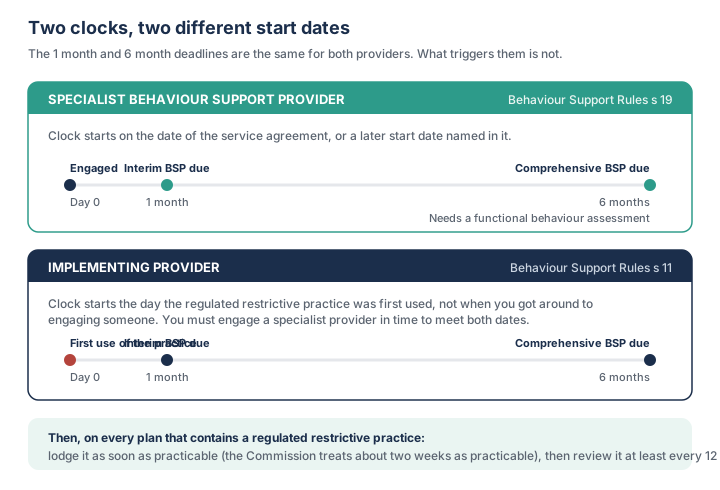
If you are the specialist behaviour support provider (section 19 of the Behaviour Support Rules), the clock starts from engagement: the date of the service agreement, or a later date named in the agreement as the start date for developing the plan. Interim plan within 1 month, comprehensive plan within 6 months.
If you are the implementing provider (section 11), the clock starts from the day the regulated restrictive practice was first used. Where a practice will be used on an ongoing basis you must engage a specialist behaviour support provider, and you must do it early enough that an interim plan exists within 1 month of that first use and a comprehensive plan within 6 months. Waiting three months to engage someone does not buy you three extra months.
Two consequences follow that catch providers out. When the allocated practitioner changes but the specialist provider stays the same, the deadline still runs from the provider's original engagement date, not from the day the new practitioner picked up the file. And when a participant moves to a new specialist behaviour support provider, that new provider takes on the section 19 obligations from its own engagement date, so it must produce a comprehensive plan within 6 months even if the participant already has one.
What the regulator expects once the plan exists
Lodgement. A plan containing a regulated restrictive practice must be lodged with the NDIS Commission as soon as practicable after it is developed. The Commission's May 2026 policy guidance puts a number on it: about two weeks from the date the practitioner finalises the plan is generally practicable. It applies regardless of who will implement the practice, and regardless of whether state or territory authorisation has been obtained yet. Do not hold a plan back waiting for the authorisation to come through.
Authorisation, then use. Getting authorisation is the implementing provider's job, through the authorising body in the state or territory where the person lives, and the evidence goes into the Commission portal. A practice that is not in a plan, not authorised, or not used in line with the plan is an unauthorised restrictive practice and a reportable incident, notifiable within 5 business days of the provider becoming aware.
Activation and monthly reporting. Once the practitioner lodges the plan, the implementing provider activates it in the portal, lodges the authorisation evidence, and reports monthly on the use of the practices in the plan's schedule, including in months where a practice was not used. Reporting is due within 5 business days of month end.
Review. A comprehensive plan must be reviewed at least every 12 months while it is in force, and earlier if circumstances change. The 12 months runs from the date the plan came into force, which the Commission defines as the latest date appearing on it: the plan date, the practitioner's dated signature, or a supervisor's signature. A change in circumstances includes a pattern of unauthorised restrictive practices, a change in living arrangements, or a change of provider.
Common mistakes
Assuming the interim plan buys six months. It does not. Both deadlines run from the same trigger event, so if the interim plan lands at the one-month mark, the comprehensive plan is due five months later, not six.
Holding the plan back until authorisation is granted. Lodgement and authorisation are separate duties on separate timelines. The plan is lodged as soon as practicable; the practice is not used until authorised.
Treating an administrative edit as a review. Fixing typos, adjusting a medication dose, or tweaking a skill development program is not a review, and the Commission says so directly. Record those as an addendum or through version control, leave the in-force date alone, and do the annual review anyway. The exception: if an edit changes the authorisation status of a regulated restrictive practice, that requires a full review and a fresh lodgement.
Reporting only in months when a practice was used. Monthly reporting includes nil use. A gap in the reporting history reads as a missed report, not as a good month.
Never telling the practitioner anything changed. The implementing provider has a standing duty to notify the specialist provider when something happens that requires the plan to be reviewed. If the first the practitioner hears of a change is at the annual review, both parties have a problem.
Filing the plan and not training to it. A plan sitting in a folder that workers have not been trained on will not survive an audit against Practice Standards Module 2A, and it is the most common way a compliant plan produces non-compliant practice.
Frequently asked questions
What is the difference between an interim and a comprehensive behaviour support plan?
An interim behaviour support plan is a short safeguarding document with general preventative and responsive strategies, used while the assessment work is still under way. A comprehensive behaviour support plan is built on a behaviour assessment including a functional behaviour assessment, and sets out the function of the behaviour, environmental changes, skill development programs, response strategies, and how any regulated restrictive practice will be reduced and eliminated. The comprehensive plan replaces the interim one rather than extending it.
When must a behaviour support plan be lodged with the NDIS Commission?
A behaviour support plan containing a regulated restrictive practice must be lodged as soon as practicable after it is developed. The NDIS Commission generally considers about two weeks from the date the practitioner finalises the plan to be a practicable timeframe. The duty applies regardless of who implements the practice and regardless of whether state or territory authorisation has been obtained yet.
How long does a provider have to get a behaviour support plan in place?
It depends on the role. A specialist behaviour support provider must develop an interim plan within 1 month and a comprehensive plan within 6 months of being engaged, measured from the service agreement date or a later start date named in it. An implementing provider must have those same plans in place within 1 month and 6 months of the day the regulated restrictive practice was first used, which means engaging a specialist provider early enough to meet both dates.
How often must a behaviour support plan be reviewed?
A comprehensive plan must be reviewed at least every 12 months while it is in force, and earlier if the person's circumstances change in a way that requires the plan to be amended. The 12 months runs from the date the plan came into force, which is the latest date appearing on the plan. A pattern of unauthorised restrictive practices, a change in living arrangements, or a change of provider will generally count as a change in circumstances.
Do we need a behaviour support plan if no restrictive practice is used?
The statutory timeframes in the Behaviour Support Rules apply to plans containing regulated restrictive practices. Where no regulated restrictive practice is involved, a specialist behaviour support provider must still engage a suitable NDIS behaviour support practitioner to develop the plan, and the NDIS Commission expects the same 1 month and 6 month timeframes to be used as a guide, consistent with obligations under the NDIS Practice Standards and the NDIS Code of Conduct.
What happens if a participant changes to a new specialist behaviour support provider?
The newly engaged provider takes on the section 19 obligations from its own engagement date, so a comprehensive plan is due within 6 months even where the participant already has a plan. It may work from an existing plan rather than starting again, but only after confirming the plan is current and appropriate and that the implementing provider has lodged it, that it lists every regulated restrictive practice in use, that the restrictive practice schedule is accurate for monthly reporting, and that the practices are authorised under the relevant state or territory process.
Related terms
Go deeper
Last reviewed