Why this matters for your practice
Positive behaviour support is the frame the whole NDIS behaviour support system sits inside, and it is where providers most often assume the obligation belongs to someone else. Where a regulated restrictive practice is used, the Commission does not simply require a plan on file. It requires the practice to be used within a positive behaviour support framework, with safeguards and a live intention to reduce and eliminate it.
That has a practical edge for two groups. If you deliver specialist behaviour support, your registration and your practitioners' suitability both depend on the capability framework below. If you only implement other people's plans, you are still assessed on whether your service operates in a way that supports the approach: whether workers understand the strategies, whether the environment has actually been changed, and whether restrictive practice use is trending down rather than sitting flat.
The distinction to hold on to is that positive behaviour support is the approach and the behaviour support plan is one output of it. A service can hold a compliant plan and still not be delivering positive behaviour support.
What positive behaviour support actually is
The NDIS Commission describes positive behaviour support as an evidence, values and rights based approach that focuses on improving a person's quality of life by understanding the reasons behind their behaviour and identifying ways to meet their individual needs. In practice the strategies fall into three groups: teaching the person new skills, making changes to their environment, and providing guidance and assistance to the person's support team.
The logic runs the other way from restrictive practice. The Commission is explicit that restrictive practices do not produce lasting positive change, do not meet the person's needs or improve their quality of life, and do not address the reasons for the behaviour, and can sometimes make it worse. Positive behaviour support is the response to the function of the behaviour; a restrictive practice only suppresses the behaviour, which is why it can only ever be a last resort inside a plan that is working to remove it.
For an assessor, that difference shows up in evidence. A fade-out plan that has been written but never actioned is the classic finding. The Commission's May 2026 guidance on monitoring and reviewing plans asks that where the reduction of a restrictive practice has not progressed, the review documents the barriers and specifies clear actions, responsibilities and timeframes.
The Positive Behaviour Support Capability Framework
The Framework is how the Commission turns the approach into an assessable standard. It sets out the knowledge and skills that underpin contemporary evidence-based practice, and it is what a person is assessed against when they apply to be considered a suitable NDIS behaviour support practitioner.
It has four capability levels: core, proficient, advanced and specialist. One point is regularly misread: the Commission does not endorse or certify a practitioner at a level. It makes one of three decisions on an application, suitable, not suitable, or unable to make a decision, and progression through the levels afterwards happens through professional and clinical supervision, not through the Commission.
There are two ways in. The self-assessment pathway requires a portfolio of evidence assessed against the Framework. The new entry-level pathway exists for applicants with less than six months of behaviour support experience or a limited portfolio, who then develop their skills against the Framework instead. Entry-level practitioners are later invited to a reconsideration process: they self-assess again, discuss it with their supervisor, and submit an endorsement tool signed by both. They can keep working during it, but if the Commission cannot get the information it asks for, suitability can be revoked, and a practitioner without suitability cannot undertake behaviour support assessments or develop plans even under supervision.
For a provider, that last point is a continuity risk worth tracking. Practitioner suitability is not a one-off credential, and losing it takes your capacity to produce plans with it.
What the regulator or assessor expects
Behaviour support and restrictive practices are treated as high-risk categories of support, which is why they attract registration conditions rather than general obligations.
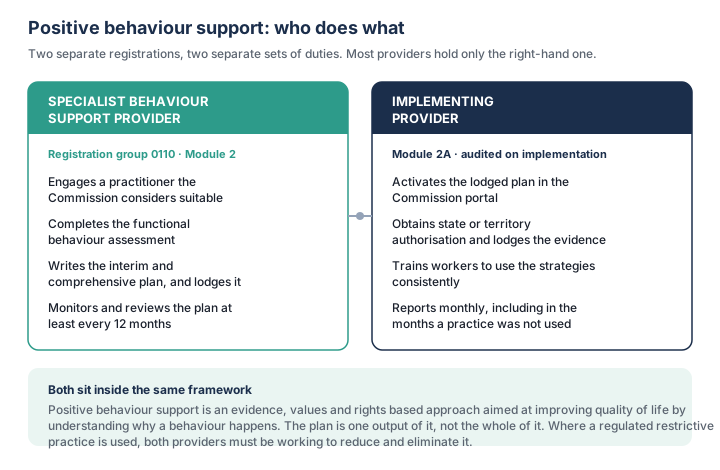
Specialist behaviour support providers must be registered with the NDIS Commission under registration group 0110 Specialist positive behaviour support, and are audited against the specialist behaviour support supplementary module. They must engage a suitable NDIS behaviour support practitioner to develop plans, including plans that contain no restrictive practice at all.
Implementing providers, meaning any provider that implements behaviour support plans or uses a regulated restrictive practice in the course of delivering supports, must be registered where they use regulated restrictive practices and are audited against supplementary module 2A: Implementing behaviour support plans. It is a breach of the NDIS Rules for an unregistered provider to use a regulated restrictive practice. Note that "implementing provider" is not a term defined in the legislation: the Commission introduced it to separate the two roles.
Beyond registration, the expectations that recur in Commission guidance are about system rather than paperwork: quality management systems that support a culture of continuous improvement through supervision, reflective practice and peer review; monitoring that is planned, documented and proportionate to risk; and consultation with the person and their support network that is accessible, culturally responsive and consistent with supported decision-making.
Common mistakes
Equating positive behaviour support with having a plan. The plan is the artefact. The approach is what the service does daily, and an assessor tests the second by looking at worker practice, environmental change and the restrictive practice trend line.
Assuming a practitioner only matters when a restrictive practice is involved. A specialist behaviour support provider must engage a suitable practitioner to develop a behaviour support plan whether or not it contains a restrictive practice.
Reading the capability levels as a Commission credential. The Commission decides suitability, not level. Advertising a practitioner as "Commission-endorsed advanced" misstates what the decision was.
Treating entry-level suitability as permanent. Reconsideration is part of the pathway, and suitability can be revoked if the process is not completed. Diarise it alongside your worker screening expiries rather than waiting for the invitation letter to surface in someone's inbox.
Leaving fade-out plans on paper. A reduction strategy that has not moved in twelve months, with no documented barriers or actions, is one of the more reliable ways to attract Commission attention.
Confusing this with a behaviour management policy. Positive behaviour support starts from the function of the behaviour and the person's quality of life. A policy built around responses to incidents is a different thing, and it will read as one.
Frequently asked questions
What is positive behaviour support in the NDIS?
Positive behaviour support is an evidence, values and rights based approach that improves a person's quality of life by understanding the reasons behind their behaviour and meeting the underlying need, using strategies such as teaching new skills, changing the person's environment, and supporting the people around them. Where a regulated restrictive practice is used, the NDIS Commission requires it to be used within a positive behaviour support framework, with safeguards and an active focus on reducing and eliminating it.
What is the difference between positive behaviour support and a behaviour support plan?
Positive behaviour support is the approach; a behaviour support plan is the document that applies it to one person. The plan sets out the assessed function of the behaviour and the agreed strategies. The approach covers everything around it, including how workers are trained, how the environment is changed, how progress is monitored, and how restrictive practices are reduced over time.
What is the Positive Behaviour Support Capability Framework?
It is the NDIS Commission's statement of the knowledge and skills that underpin evidence-based behaviour support practice, and the standard a person is assessed against when applying to be considered a suitable NDIS behaviour support practitioner. It has four capability levels: core, proficient, advanced and specialist.
Does the NDIS Commission certify a practitioner at a capability level?
No. The Commission makes one of three decisions on a suitability application: suitable, not suitable, or unable to make a decision. It does not endorse practitioner capability levels. Practitioners who are considered suitable progress through the levels via professional and clinical supervision arrangements.
What registration do we need to deliver specialist behaviour support?
Registration with the NDIS Commission including registration group 0110 Specialist positive behaviour support, plus audit against the specialist behaviour support supplementary module. Providers that implement behaviour support plans containing regulated restrictive practices need registration and audit against supplementary module 2A, Implementing behaviour support plans. An unregistered provider using a regulated restrictive practice is in breach of the NDIS Rules.
Can a new practitioner with limited experience be considered suitable?
Yes, through the new entry-level pathway, which is designed for applicants with less than six months of behaviour support experience or a limited portfolio of evidence. They develop their capabilities against the Framework and are later invited to a reconsideration process involving a fresh self-assessment and a supervisor-signed endorsement tool. They can continue working during reconsideration, but suitability can be revoked if the process is not completed, and without suitability a person cannot undertake behaviour support assessments or develop plans even under supervision.
Related terms
Go deeper
Last reviewed